

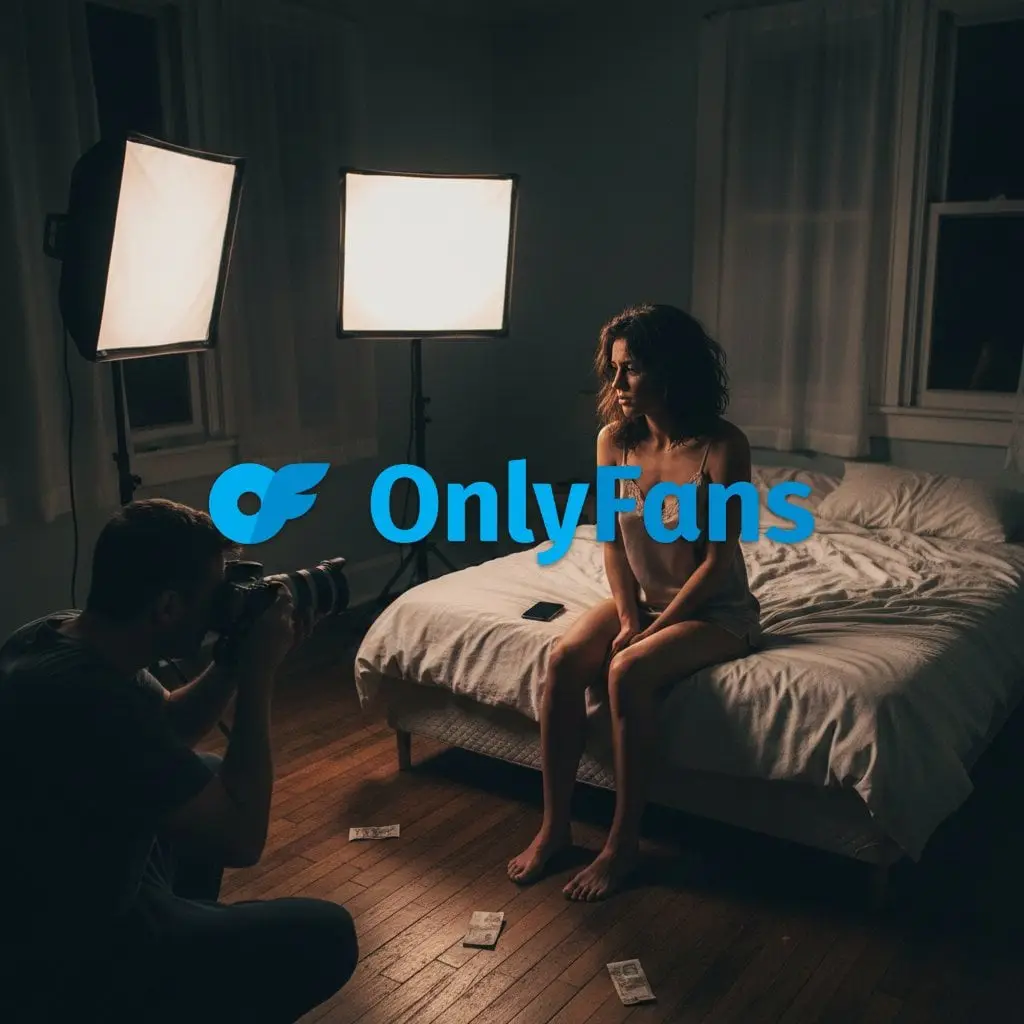
I do not write this article from theory, nor from moral superiority. I write it from experience. Before my return to the Catholic faith, my wife and I briefly entered the world of OnlyFans. We were there only a few months, but that was more than enough to experience firsthand what the data now clearly confirms: the promise of “financial independence” is largely a lie sustained by pressure, illusion, and exploitation.
We entered believing a narrative that is aggressively promoted today—the idea that sexualizing the body can be transformed into economic freedom, that with “clear boundaries” and subscriptions one can remain in control. That illusion collapses quickly once you confront the platform’s real logic.
When statistics acquire a human face
According to Save the Children España, around 30% of young people between the ages of 18 and 21 believe that selling sexual content online is a legitimate way to earn money, and a similar percentage believes that “a lot of money” is made on these platforms. This belief did not emerge spontaneously. It has been carefully cultivated.
Headlines glorify exceptional cases: creators who “quit their jobs and earn millions,” stories engineered to function as aspirational propaganda. But the real data tells a radically different story.
Independent analyses of OnlyFans show that roughly 0.1% of creators take around 76% of all the revenue generated on the platform. The overwhelming majority do not live from this. Median earnings hover around $150–$170 per month, and a large portion of active accounts earn almost nothing.
What numbers alone do not fully convey is the constant pressure. The persistent feeling that nothing is ever enough, that there is always a need to offer more, go further, and cross one more line to retain or attract subscribers. The system does not reward restraint; it rewards escalation.
“Everything is allowed” if it converts to cash

One of the most revealing facts is that nearly 70% of OnlyFans revenue comes from private messages, not from subscriptions. This means constant availability, personalized interaction, and the simulation of intimacy. The economic incentive is clear: the more boundaries you cross, the more you earn.
This is not theoretical. I experienced it directly. This is not simply “posting photos.” It is answering messages, maintaining emotional attention, managing expectations, and adapting to increasingly explicit demands. No one forces you overtly, but the algorithm and the market punish anyone who stops.
From a Catholic perspective, this is profoundly serious. The human body is not an economic instrument nor a commodity to be adjusted to demand. The body is integral to the person. Reducing it to a product is a modern form of exploitation, even when participation is nominally voluntary.
The United States: the epicenter of the model
It is not accidental that the majority of creators and revenue on OnlyFans are concentrated in the United States. The platform’s economic engine, its most profitable users, and its most successful creators are largely based there.
The model fits perfectly within a cultural framework shaped by hyper-individualism, the glorification of financial success, and a market mentality largely detached from moral limits. The “self-made success” myth merges seamlessly with the digital sex economy, creating the illusion that anyone can succeed if they “work hard enough.”
But the data proves otherwise. A tiny elite captures almost all the wealth, while thousands expose their intimacy for precarious, temporary income. Moreover, most high-earning creators were already famous before joining the platform—actors, influencers, or public figures with pre-existing audiences. They are not a realistic model for ordinary young people entering without social capital or visibility.
Conversion, truth, and moral clarity
My return to the faith gave me the clarity to look back honestly. What was marketed as freedom revealed itself as a layered dependency: on the desires of others, on algorithms, on quick money, and on an identity shaped by consumption.
Catholic Social Teaching is unequivocal: the economy must serve the human person, not the human person the economy (cf. Compendium of the Social Doctrine of the Church, no. 331). Any business model sustained by illusion, extreme inequality, and the commodification of the person cannot be morally neutral, even if it is legal.
Christ did not come to teach us how to monetize everything, but to restore the truth about who we are. And the truth here is uncomfortable: there is no genuine financial independence when it is purchased at the cost of human dignity.
Conclusion: speaking out is a moral obligation
I write this because silence would be a form of complicity. I know—by experience—that this system thrives on half-truths, on exceptional success stories amplified as norms, and on the quiet suffering of those who never make it.
To dismantle the OnlyFans myth is not to attack individuals. It is to defend those who still believe they will find freedom there and instead will encounter pressure, exposure, and emptiness. The Church has a prophetic duty to say what many prefer to hide: not everything that is profitable is just, and not everything that is voluntary is good.
True freedom is not purchased by subscription. It is found in truth.
Sources
Compendium of the Social Doctrine of the Church, Pontifical Council for Justice and Peace.
Save the Children Spain, Reports on youth, sexualization, and digital platforms (2024–2025).
RTVE News, “One in three young people in Spain sees selling sexual content as legitimate income.”
La Vanguardia, “The normalization of OnlyFans among young people.”
Yahoo Finance, independent studies on income distribution and monetization on OnlyFans.
Influencer Marketing Hub, statistics on median creator earnings.