
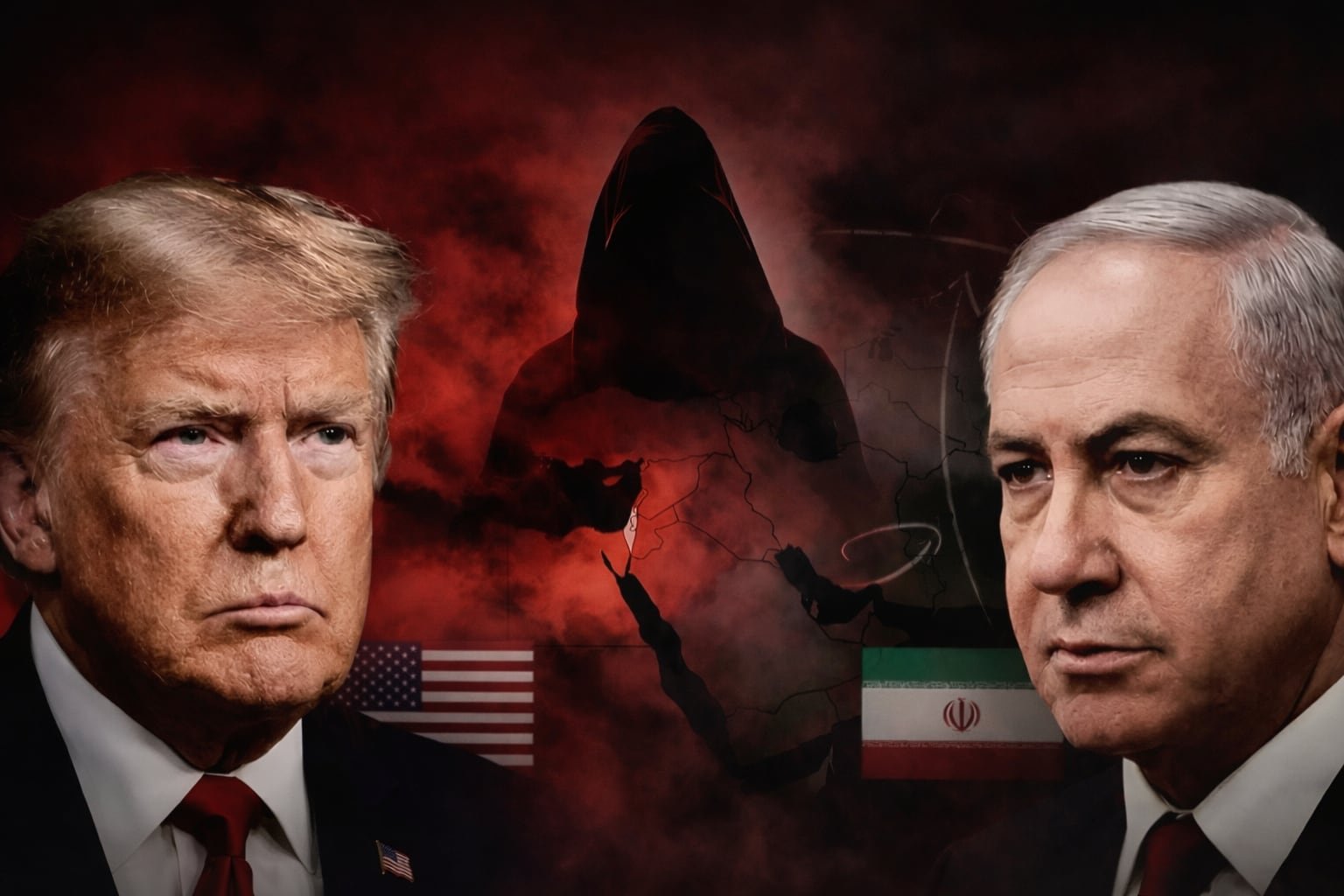
A civilization that apologizes for its own origins prepares itself for substitution. When a nation or a people renounces the roots that made it great, it loses the moral framework from which to interpret the present and defend its identity. This is not mere historical rhetoric: it is a symptom of a much deeper battle, a spiritual confrontation that today manifests itself both in the statements of Felipe VI about Isabel the Catholic and in the bombings shaking the Middle East.
The transcript from the Inquebrantables episode touches with raw honesty two inseparable realities: the poisoning of Hispanic memory through the Black Legend and the military escalation between the United States, Israel, and Iran. Neither is an isolated phenomenon. Both reveal how the enemy of souls seeks to erase the name of Christ from history and from the conscience of peoples.
The Black Legend: An Attack on the Catholic Identity of Hispanic America
Felipe VI, in an act that many interpret as diplomatic but which constitutes an ideological positioning, acknowledged “much abuse” and “moral and ethical controversies” during the Spanish presence in America, alluding to the directives of the Catholic Monarchs and the Laws of the Indies. In doing so, whether intentionally or not, he gave oxygen to the Black Legend: that narrative forged over centuries by Protestants, Enlightenment thinkers, and enemies of the Faith that paints the evangelization of America as systematic genocide and the Spanish Crown as a cruel oppressor.
The Church has never denied the sins of her children. The Catechism of the Catholic Church itself and the Magisterium have recognized abuses committed by concrete men, moved by greed or violence. However, the historical truth is more complex and luminous. Isabel the Catholic promoted evangelization with an explicit missionary zeal: she treated the indigenous as free vassals, encouraged mixed marriages, issued protective laws, and financed the work of missionaries who defended their dignity. Bartolomé de las Casas, Fray Antonio de Montesinos, and many others raised their voices precisely because Catholic doctrine — founded on the image of God in every man — demanded it.
“Many grave sins were committed against the native peoples of America in the name of God,” Pope Francis recognized in Bolivia (2015), asking forgiveness. But he added that where sin abounded, grace abounded even more through those who preached the Gospel with the Cross and not with the sword. The conquest was not perfect, but it bore fruit in a mestizo civilization steeped in the Catholic Faith, universities, law, language, and sacraments. Comparing it with other conquests in history — including the English in North America — reveals that Spain’s evangelizing and civilizing balance was unequaled.
When a king of Spain, heir to that tradition, bows before the narrative of permanent guilt, he contributes to cultural de-Christianization. A society that views its origin as sin loses confidence in itself, abandons its identity, and becomes vulnerable to being reconfigured from outside. This is not past history: it is the same mechanism operating today in the West to erode the Christian Faith.
“Confusion always favors the one with the greatest capacity to influence,” the transcript states. Exactly. The Black Legend generates confusion so that Hispanic peoples doubt their Catholic heritage and end up serving secularized ideologies or powers that despise Christ.
The War in the Middle East: Not Only Geopolitical, but Spiritual
The episode correctly connects this attack on memory with the current conflict between the United States, Israel, and Iran. What many present as a mere dispute over resources, hegemony, or nuclear security is, at its root, a spiritual war.
Judaism without Christ is an incomplete heresy that awaits a political Messiah and dreams of rebuilding the Third Temple to resume sacrifices already superseded by the unique Sacrifice of Christ on the Cross (Heb 10:1-18). Islam denies the divinity of Jesus Christ and sees jihad as a form of subjugation. Both visions, though profoundly different, reject the fullness of Revelation in the New Testament.
The Catechism of the Catholic Church (nn. 2307-2317) teaches with clarity: the fifth commandment condemns the voluntary destruction of human life. Every war brings evils and injustices; therefore the Church urges that it be avoided and that peace be worked for. Only in the extreme case of legitimate defense, after all peaceful means have been exhausted and under strict conditions (grave and certain damage from the aggressor, proportionality, serious probability of success, and that greater evils are not caused), can armed defense be considered morally licit.
Neither “preventive war” nor the indiscriminate escalations we observe today fully meet these criteria. The first victim of every war is the truth, and then the weakest: Christians persecuted or displaced in the region, shattered families, innocents under bombs. In the name of poorly interpreted prophecies (Protestant dispensationalism that confuses the biblical Israel with the modern State) or radical fanaticisms, entire peoples — including many Christians in the armed forces — are dragged into a conflict that is not theirs.
St. Augustine and St. Thomas clearly distinguished between true peace, which is the work of justice and charity, and the false peace of domination. Today, as the transcript recalls with the prayer to St. Joseph, humility is needed: to recognize that neither leaders nor analysts possess divine wisdom. Only God can touch hearts filled with pride and hatred.
The Church, faithful to the Magisterium, does not align itself with political blocs or with heresies. It recognizes “seeds of truth” in other religions (Nostra Aetate, Vatican II), but affirms without ambiguity that full salvation is in Christ and in His Church. The chosen people today is the Church, the Mystical Body of Christ (cf. Rom 11; CCC 839-840). Expecting a physical Third Temple as prophetic fulfillment is to ignore that Christ Himself is the new Temple (Jn 2:19-21) and that the Levitical sacrifices have been abrogated.
A Call to Humility and Discernment
The prayer to St. Joseph with which the episode begins is providential: “Teach us, Joseph, how to be great without showing off… how to serve without looking at whom… how to attain glory from silence.” Amid propaganda, opposing narratives, and excess information, Catholics are called to discern, not to align blindly.
It is not a question of choosing sides between heresies, but of remaining in Christ. The spiritual war is won with the humility that recognizes one’s own sin, historical truth without self-flagellation, and the primacy of evangelical peace over every ideology.
May the Virgin Mary, Queen of Peace, and St. Joseph, protector of the Church, intercede so that violence in the Middle East ceases, the just memory of our Hispanic history is restored, and peoples once again recognize Christ as King.
Sources
- Catechism of the Catholic Church (CCC 2307-2317; 839-840).https://www.vatican.va/archive/ENG0015/_INDEX.HTM
- Declaration Nostra Aetate of the Second Vatican Council (October 28, 1965).https://www.vatican.va/archive/hist_councils/ii_vatican_council/documents/vat-ii_decl_19651028_nostra-aetate_en.html
- Pope Francis, Speech at the Second World Meeting of Popular Movements, Bolivia (July 9, 2015).https://www.vatican.va/content/francesco/en/speeches/2015/july/documents/papa-francesco_20150709_bolivia-movimenti-popolari.html
- Historical documents on Isabel the Catholic and the Laws of the Indies (General Archive of the Indies and missionary chronicles).