
A State That Kills to Survive
There are regimes that kill their external enemies. Iran’s kills its own citizens because it fears them. That distinction is not minor — it is theological, political, and moral all at once. What is happening in Iran during these weeks of April 2026 is not simply a geopolitical news item. It is the X-ray of a system that has lost all legitimacy and that, incapable of governing through consent or justice, resorts to the only instrument it has left: fear.
At least four members of the People’s Mojahedin Organization of Iran (PMOI) were executed within the last 48 hours, according to the National Council of Resistance of Iran. Mohammad Mohaddessin, chair of the NCRI’s Foreign Affairs Committee, described the executions as a message meant to “intimidate” and “exert control” over the population. NCRI His words deserve to be cited without ambiguity: “The execution of four PMOI members, amid an external war, is a clear admission by the regime that it views the Iranian people and the organized Resistance as its principal enemy and an existential threat.” NCRI
That sentence says everything. The Islamic regime in Tehran does not fear Israel’s armies or America’s aircraft carriers as much as it fears its own people. That is the truth these mass executions reveal.
The Terror Machine: Numbers That Condemn
These are not isolated incidents. According to recorded data, at least 648 executions were reported in Iran in 2026 through the end of February — 341 in January and 307 in February. In the period from late February through March 2026, at least 1,679 arrests were recorded. Iran HRM
Since the 2022 “Woman, Life, Freedom” uprising, Iranian authorities have embarked on an execution spree, putting thousands to death following grossly unfair trials, with the pace accelerating following the 2025 war and reaching a scale not seen in over four decades. Amnesty International
The most recent victims have names and ages that condemn the regime before any moral tribunal. Saleh Mohammadi, just 19 years old, a national wrestling champion and bronze medalist at the 2024 Saitiev Cup in Russia, was hanged in public. Saeed Davoudi, 21, was executed just two days before his 22nd birthday. Mehdi Ghasemi was killed alongside them after a trial reportedly lasting only minutes. All three had been arrested during the January 2026 uprising. NCRI
According to Amnesty International, the men at risk or already executed all stated they were subjected to torture and other ill-treatment in detention — including beatings, floggings, prolonged solitary confinement, and death threats at gunpoint — before being convicted in grossly unfair trials that relied on forced confessions extracted under torture and lasted only a few hours. Amnesty International
This is not justice. It is institutionalized murder.
Fear as the Theology of Power
Christian tradition teaches that political authority has its foundation in natural law and the common good. The Catechism of the Catholic Church, echoing Saint Paul, reminds us that civil authority exists to serve the good of society and that its legitimate exercise requires respect for the fundamental dignity of the human person:
“Political authority is obliged to respect the fundamental rights of the human person.” (CCC 2237)
The Iranian regime does not govern for the common good. It governs for its own survival. And the difference between those two things is precisely what distinguishes a legitimate state from a tyranny. The clerical dictatorship has continued killing political prisoners and protesters even while the country is under constant foreign bombardment. That choice is an admission of weakness, not strength. It reveals a regime that knows the greatest threat to its survival is not a foreign attack but a nationwide revolt. NCRI
Saint Thomas Aquinas, in his treatise on law and government, stated clearly that tyranny is the worst of regimes because it perverts the very purpose of power. The tyrant does not serve the community; he instrumentalizes it for his own benefit. What Tehran is doing — executing citizens to deter popular uprisings — is the crudest expression of that perversion.
A State That Has Declared War on Its Own People
The commander-in-chief of Iran’s Law Enforcement Forces, Ahmadreza Radan, declared in a live interview on state television on March 10, 2026: “If someone takes to the streets at the behest of the enemy, we do not consider them a protester or anything of that sort. We consider them an enemy, and we deal with them as we deal with an enemy.” Iran HRM
This declaration is doctrinally revealing. The regime has redefined dissent as treason, protest as enmity, and individual conscience as subversion. It is the logic of totalitarianism in its purest form. The expansion of security measures across cities — particularly in Tehran — combined with the continuation of the war and the refusal to release prisoners, points to growing concern within the regime about the potential for another internal uprising. These measures include over 129,000 personnel deployed around the clock, 1,463 checkpoints established nationwide, and nearly 15,000 patrol units continuously active. WorldNetDaily
Given that an estimated 50,000 individuals were arrested during the January 2026 uprising, this approach is a dire warning of an impending human catastrophe and another political massacre by the Islamic Republic. Iran HRM
The Church Before State Terror
The Social Doctrine of the Church is not neutral before these realities. The Second Vatican Council, in the pastoral constitution Gaudium et Spes, listed among the acts that “poison human civilization” and “dishonor those who do them more than those who suffer the wrong”: “arbitrary killings or deportations” and “all violations of the integrity of the human person” (GS 27).
Human life is sacred because man was created in the image and likeness of God (Gen 1:27). No state grants that dignity, and no state can legitimately take it away. When a government executes 19-year-olds on the basis of confessions extracted under torture, it is not exercising authority — it is desecrating it.
Saint John Paul II, in the encyclical Evangelium Vitae, warned against what he called a “culture of death,” which is not limited to abortion or euthanasia but encompasses every instrumentalization of the human being by power. Iran is, today, one of the most brutal theaters of that culture.
The Resistance That Will Not Be Silenced
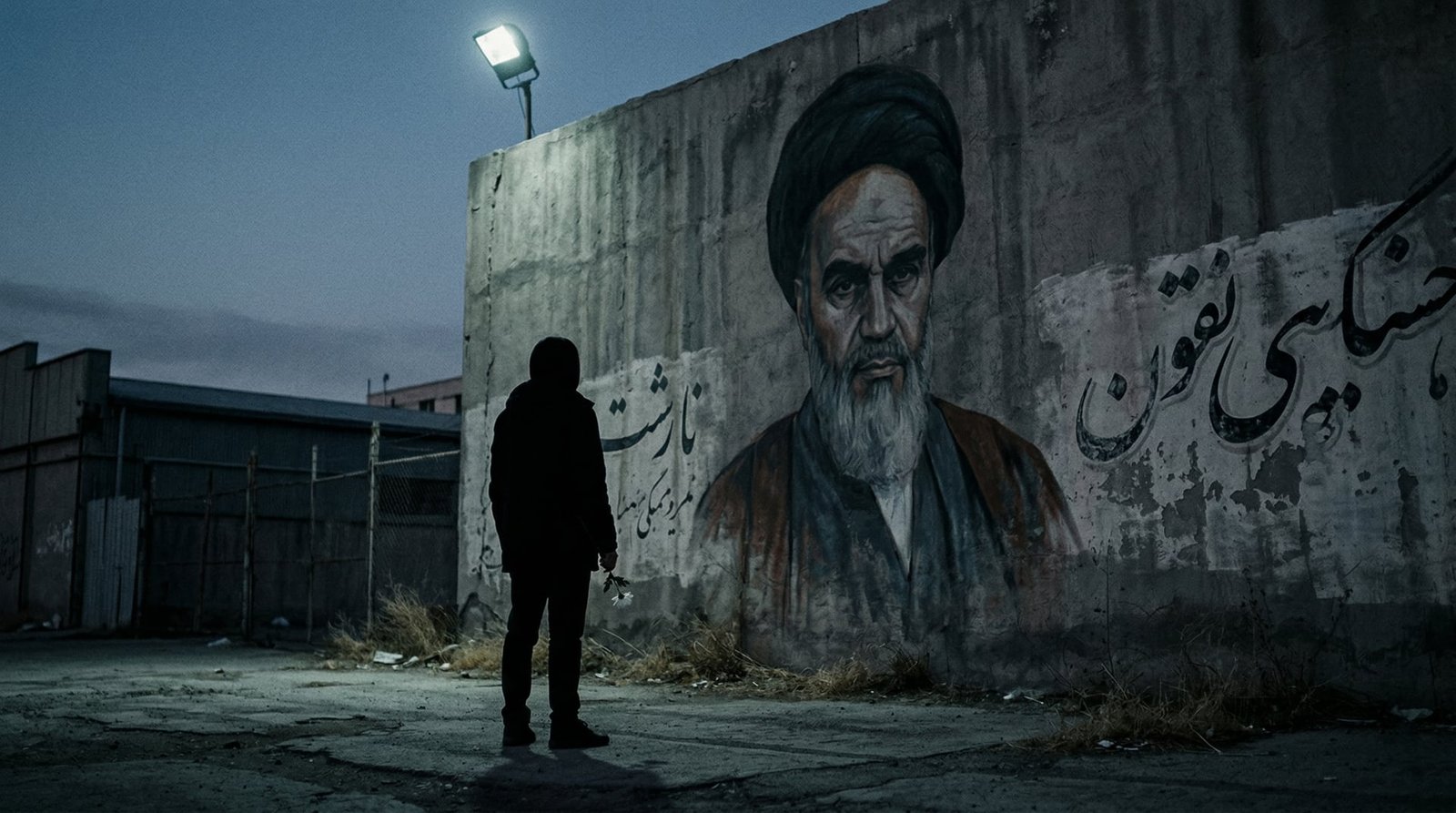
In the face of terror, the Iranian people’s response has shown a moral fortitude that deserves recognition. On March 31, 2026, Resistance Units openly commemorated the executed martyrs. Activists laid flowers, held placards, and installed posters in public spaces across major cities including Tehran, Tabriz, Karaj, Isfahan, and Mashhad, openly defying the regime’s security apparatus. NCRI
Messages placed on vehicles in Tehran read: “We swear on the blood of our comrades that we will stand till the end and continue their path until victory.” That is not empty rhetoric. It is the voice of a people that has decided certain things are worth more than safety.
From a faith perspective, this kind of witness — giving one’s life for truth and liberty — carries a moral weight that purely geopolitical analyses cannot capture. We do not simply equate religious martyrs with political ones, but we do recognize that the generous surrender of one’s life in defense of human dignity bears a gravity no regime can erase.
Conclusion: Complicit Silence Is a Moral Choice
Human Rights Watch has documented that the spiral of impunity and bloodshed resulted in an execution spree unseen in decades in 2025, and in the deadliest protest crackdown leading to mass killings of thousands of protesters and bystanders in 2026. Human Rights Watch
The international community, Western governments, multilateral bodies, and the Churches themselves bear a responsibility in the face of this. Silence before the systematic murder of dissidents is not neutrality — it is passive complicity. The Christian tradition has always taught that in the face of grave injustice, abstaining from action is morally equivalent to consenting to it.
Iran is not a case we can relegate to the geopolitics section without consequences for our conscience. It is a people crying out and dying. And before that cry, indifference is not a morally available option for anyone who claims to believe in the inviolable dignity of every human being.
Sources:
- New York Post / Tribune Media, April 2, 2026
- National Council of Resistance of Iran (NCRI): Iran News in Brief – April 2, 2026
- Amnesty International: Iran: Seven protesters and dissidents at risk of imminent execution, April 1, 2026
- Human Rights Watch: Iran: Human Rights Situation Spirals Deeper into Crisis, February 2026
- Iran Human Rights Monitor (Iran HRM): Executions, Mass Arrests, and Intensified Judicial Pressure, April 2026
- Iran Human Rights (IHRNGO): 3 Protesters Hanged; IHRNGO Warns of Mass Executions, March 2026
- Catechism of the Catholic Church (CCC 2237)
- Second Vatican Council, Gaudium et Spes, n. 27
- Saint John Paul II, Encyclical Evangelium Vitae (1995)
- Saint Thomas Aquinas, De Regno